Ruth the Moabite
The widowed Moabite outsider who clung to Naomi declaring 'Your people shall be my people, and your God my God,' gleaned in the margins of Bethlehem's harvest field, was redeemed by Boaz, and became great-grandmother to King David in the line of Christ.
Born in Moab — a nation historically excluded from the assembly of Israel — Ruth married Mahlon, son of Elimelech and Naomi, and was left a childless widow after ten years (Ruth 1:4–5). When Naomi urged her daughters-in-law to return to their mothers' houses, Orpah kissed Naomi goodbye, but Ruth clung (Hebrew: dabaq) to her with one of Scripture's greatest covenant confessions: 'Where you go I will go, and where you lodge I will lodge. Your people shall be my people, and your God my God' (Ruth 1:14–16).
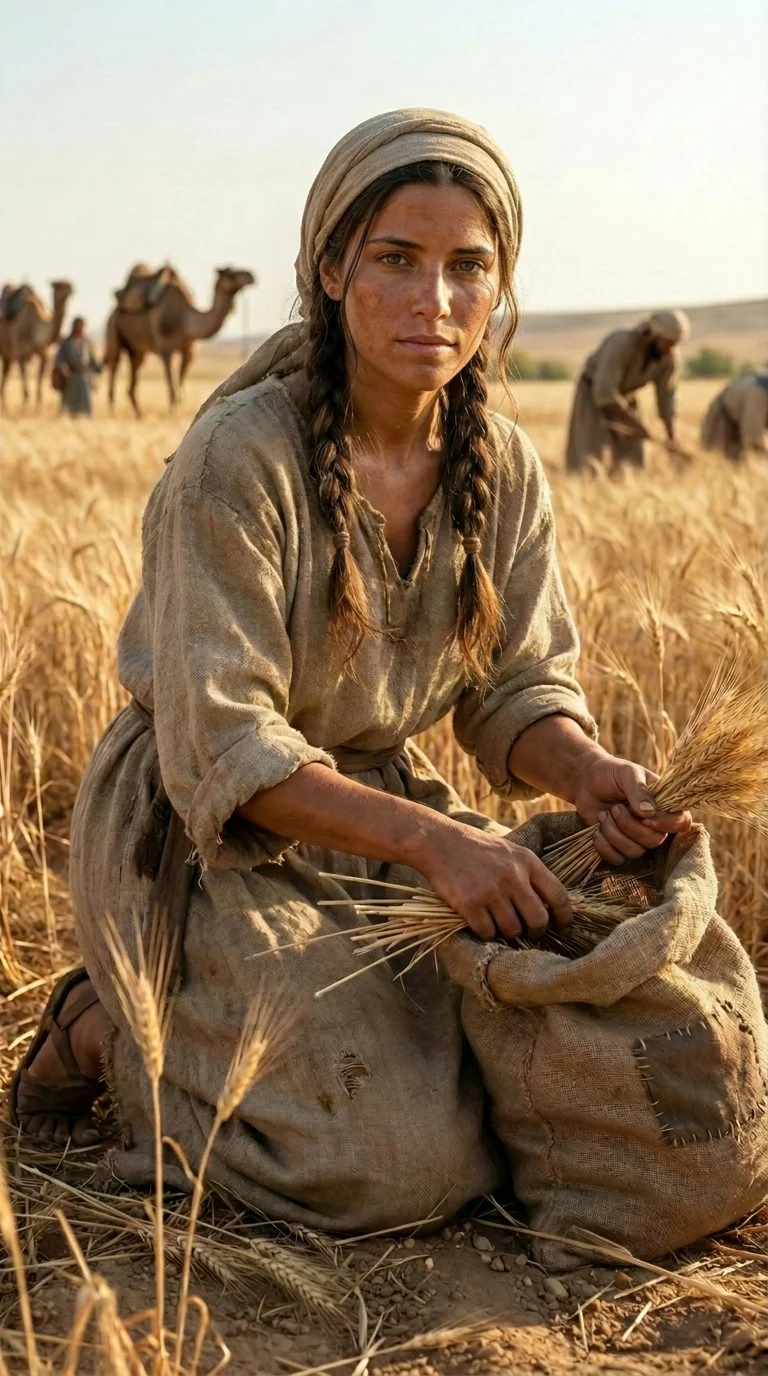
Arriving penniless in Bethlehem at the beginning of barley harvest and gleaning through until the end of the wheat harvest (Pentecost season), Ruth exercised her legal right as a foreigner to gather fallen ears of grain in the corners of Boaz's field (Ruth 2:2–3, 23). Noticed, protected, and seated at Boaz's table with purposeful handfuls pulled out for her, she was redeemed at the city gate as Boaz's bride — becoming mother of Obed, great-grandmother of King David, and the third woman named in Matthew's genealogy of Jesus (Ruth 4:9–22; Matthew 1:5).
The Outsider's Harvest — Ruth in the Bethlehem Wheat Fields, Boaz's Favor & The Gentile Pentecost
Boaz welcomes Moabite outcast Ruth to his harvest table, foreshadowing the Holy Spirit falling on Gentile outsiders.