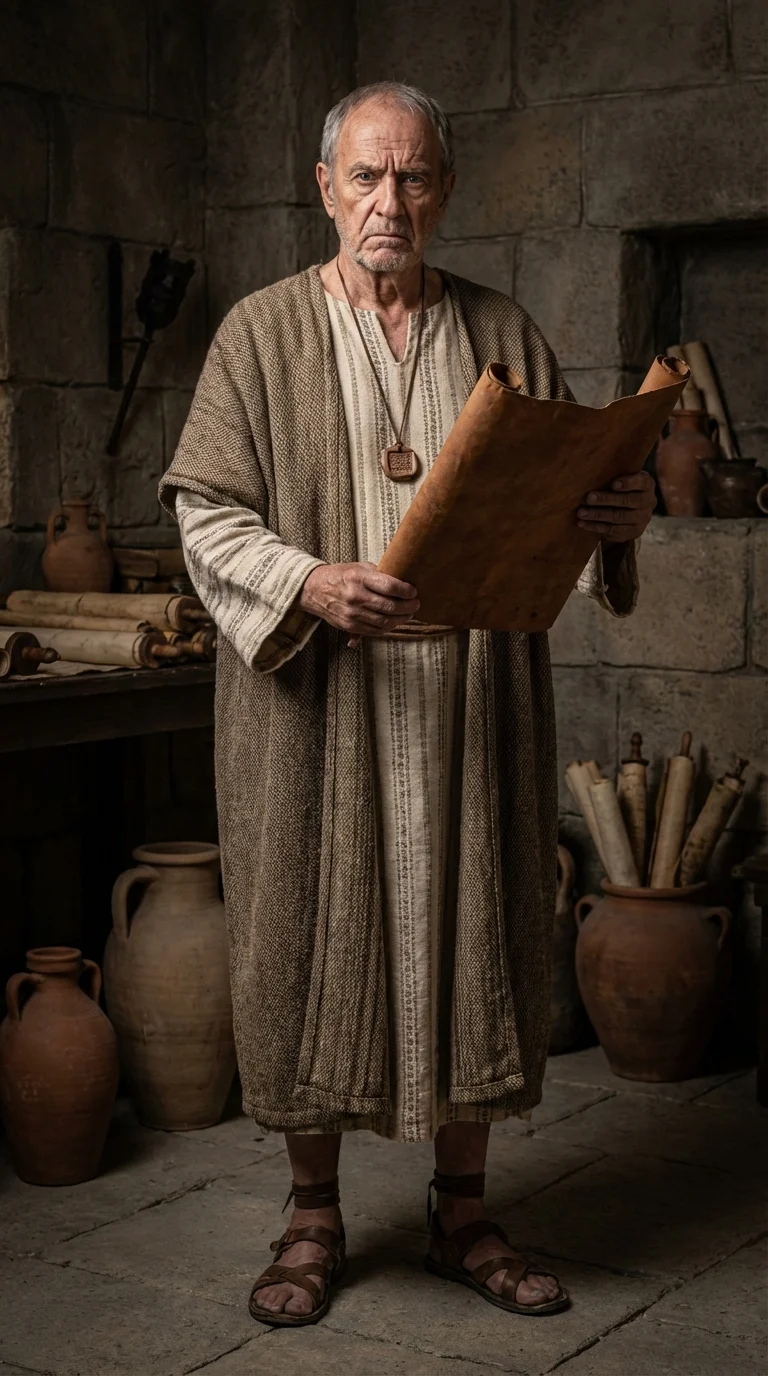
Shaphan the Scribe
Shaphan the Scribe (title)Shaphan, Son of Azaliah
Royal secretary to King Josiah who received the rediscovered Book of the Law from Hilkiah, read it for himself, and then unrolled and read the uncompromising Word aloud before the throne.
Testament
OT
Historical Era
The Divided Kingdom
Featured In
Season 8
Key Passage
2 Kings 22:3–14
✦ Tap Any Card to Unfold Full Scriptural Proof (2 Verified Insights)
Hebrew: Shaphan — 'Rock Badger / Hyrax'
2 Kings 22:3
Royal secretary and court scribe of Judah
2 Kings 22:3, 8–10
📜 Complete Scriptural Narrative
Sent by King Josiah to the temple to audit the silver for the workmen (2 Kings 22:3–7), Shaphan the scribe received the ancient scroll of the Torah from Hilkiah and read it first in the temple precincts before carrying it to the palace. Standing before Josiah, 'Shaphan read it before the king' without softening a single line — sparking Josiah's repentance and serving on the delegation to Prophetess Huldah (2 Kings 22:8–14).
How Students Search & Remember Shaphan the Scribe:
“scribe who read the book of the law aloud to king josiah”“secretary shaphan son of azaliah”
ESV Scripture Index:
2 Kings 22:3–142 Chronicles 34:8–20
Season 8 • Episode 3
Main Character
2 Kings 22
Full Episode Page →
The Torn Robe — King Josiah, The Lost Scroll of the Law & The Visceral Return to Holiness
Role in Storytime: Royal scribe who receives the ancient scroll from Hilkiah and reads its uncompromising words aloud before King Josiah.
Hilkiah uncovers the lost Book of the Law in the temple rubble, and King Josiah tears his royal robes in visceral repentance.
✦ Storytime Broadcast Theater • S8E3
King Josiah, The Lost Scroll of the Law & The Visceral Return to Holiness (2 Kings 22)
🎬 X-Ray • Also in Episode S8E3 (Tap to Switch Character)

Hebrew • H5612
Sefer HaTorah — “The Book of the Law”
The sacred covenant scroll of Moses (specifically Deuteronomy), containing God's righteous stipulations, blessings, and legal curses.
Hebrew • H7167
Qarah — “Tearing of Clothes”
To rend or rip violently apart; an ancient physical expression of visceral grief, horror, and contrition.
Hebrew • H2534
Chemah — “Divine Wrath”
Burning heat, righteous fury, or settled legal opposition of a holy God against covenant rebellion and evil.
Interactive Radial Connection Map (Tap Node to Jump)

Season 8 Companion Study Workbook
Season 8: The Wood We Could Not Carry...
Workbook Story Time: p. 36 • Greek/Hebrew Roots: p. 38